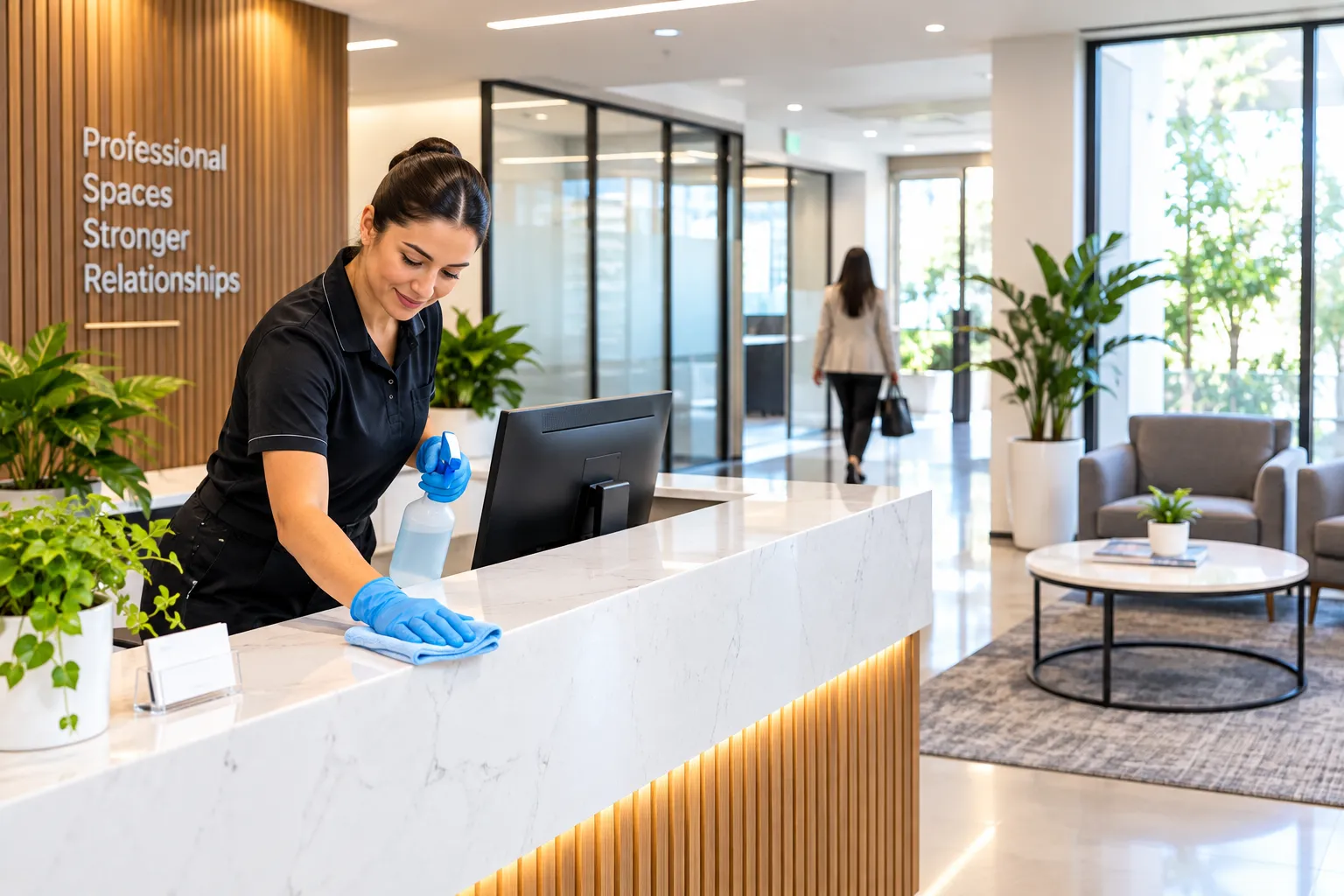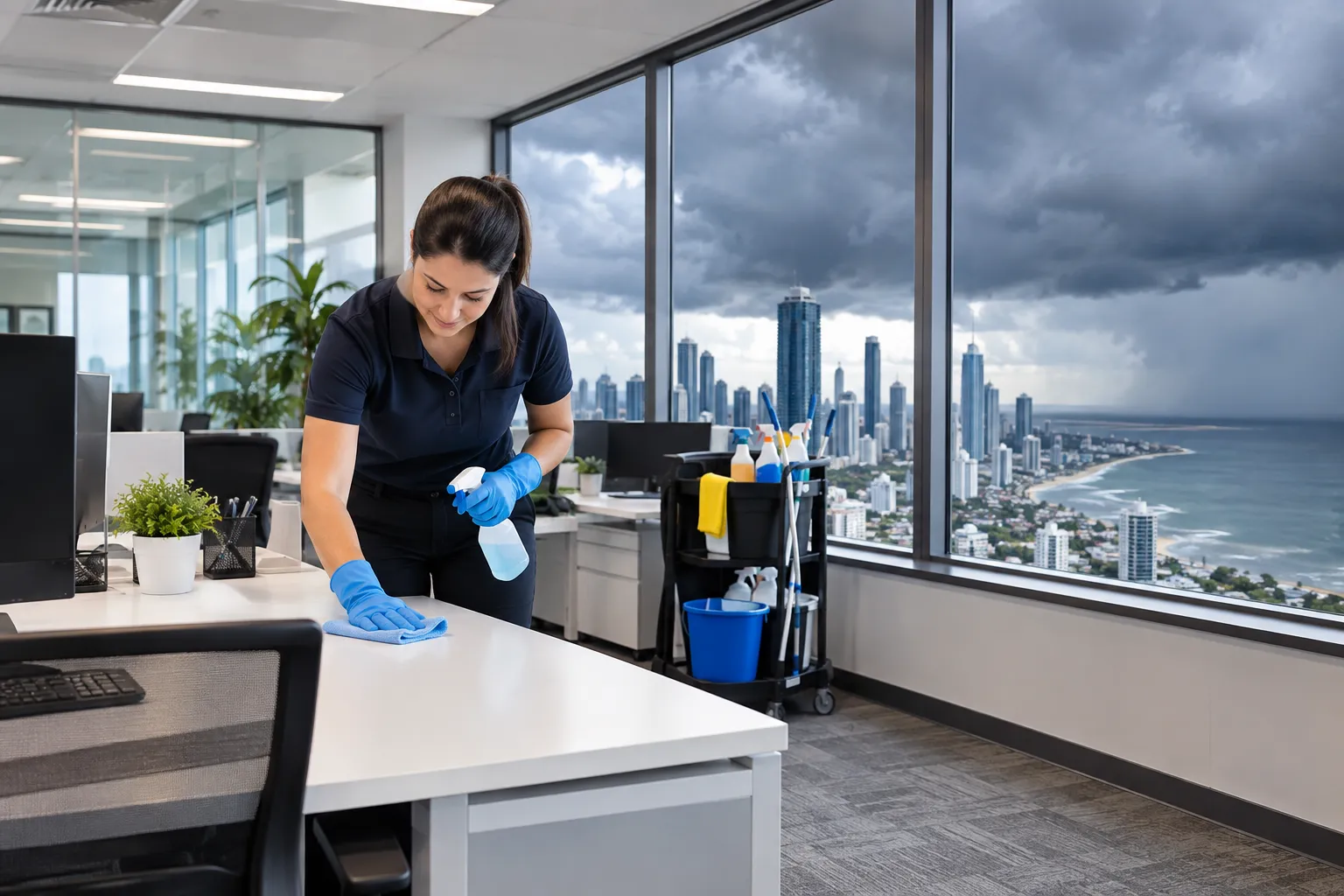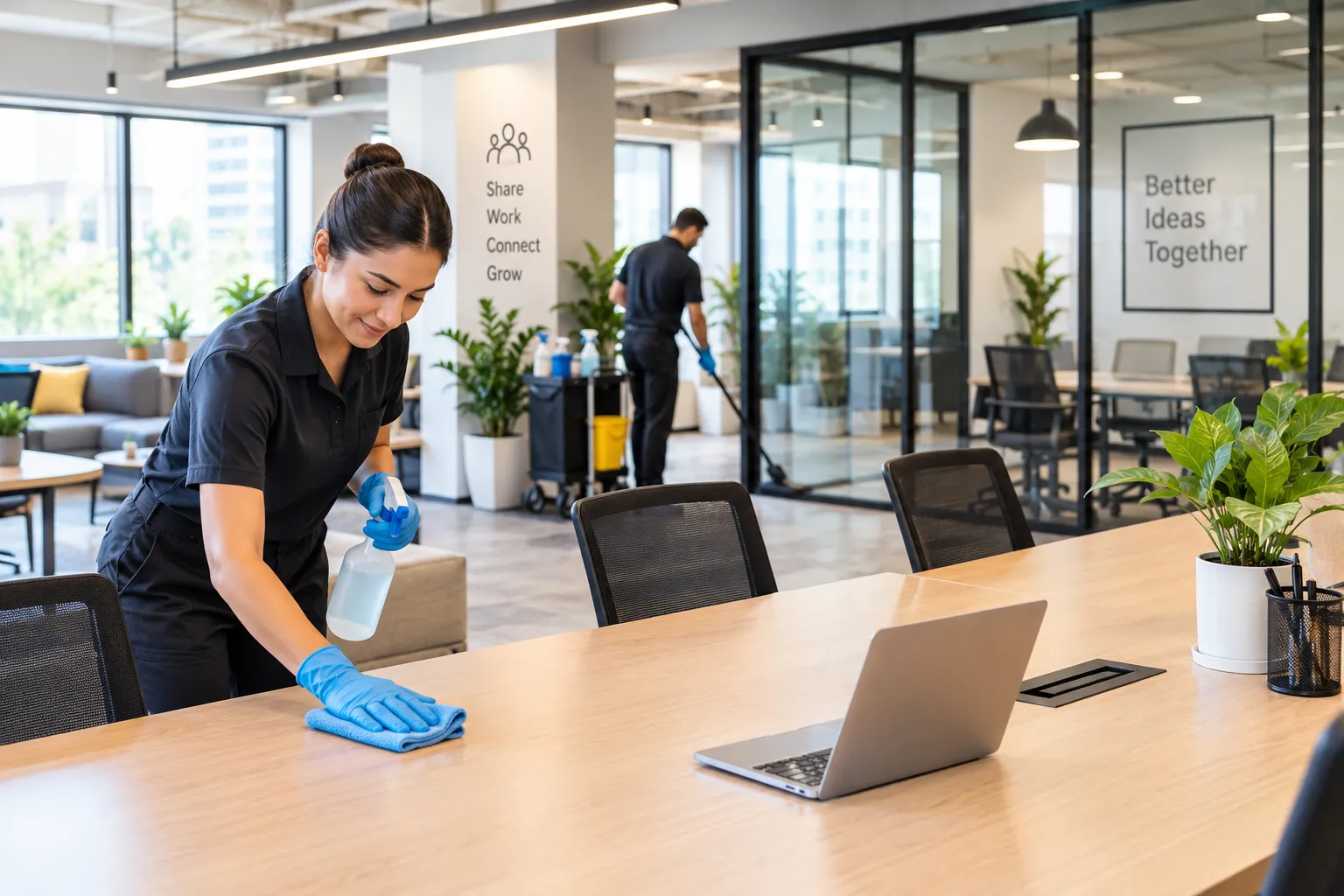
A co-working office space can buzz with activity during the busy workweek. A typical co-working hub in Australia usually has several people working at the same hot desk, multiple users waiting to use the coffee machine, and several freelancers lining up in front of the microwave every day. Unfortunately, nobody owns the mess, so they just let it slide and continue with their usual workday.
That’s the central challenge with shared offices. When several businesses, teams or individuals use the same space, cleaning becomes an option instead of a necessity. Whether you run a co-working space, sublease part of your office or share a floor with another company, regular cleaning can make your premises hygienic, safe, compliant, and productive.
As a trusted provider of professional office cleaning services on the Gold Coast, we offer our clients valuable insights. This blog explains cleaning considerations for shared and co-working office spaces, helping you make informed decisions and maintain an immaculate work environment.
Key Takeaways
- Shared offices require more frequent cleaning, as hot desks, meeting rooms, kitchens and common areas are used by multiple people throughout the day.
- High-touch areas need daily attention, including desks, keyboards, kitchen surfaces, bathroom facilities, door handles, lift buttons and shared equipment.
- Clear cleaning responsibilities are essential, with written agreements helping define who manages shared areas, cleaning tasks, costs and specific responsibilities.
- Cleaning schedules should suit operating hours, combining daytime maintenance with after-hours or weekend cleaning to minimise disruption to workers.
- Professional cleaning improves consistency and presentation, helping maintain hygiene, support productivity, protect business reputations and create a welcoming environment for members and visitors.
Shared Offices Are Now a Normal Part of Business
Shared offices are no longer a niche option for freelancers. Figures from Rubberdesk’s Australian Flexible Office Market Report show more than 25,000 flexible workstations were available across the country at the end of 2025, with growth concentrated in spaces for small and mid-sized teams.
That growth makes sense. Shared spaces let businesses pay only for what they use and grow or shrink without signing a long lease. Unfortunately, the influx of freelancers within the premises leads to more wear, rubbish, and higher chances for germs to pass from one unsuspecting person to another.
Why Shared Offices Get Dirty Faster
In a traditional office, each person has a desk, chair, and a sense of ownership over their patch. In a shared space, that sense of ownership disappears. Freelancers use the following amenities in a co-working office:
- Hot desks might be used by three or four people in a week, or even in a single day.
- Kitchens serve several companies with different habits and standards.
- Meeting rooms are booked frequently, with little time to clean between groups.
- Visitors, couriers and clients pass through all day.
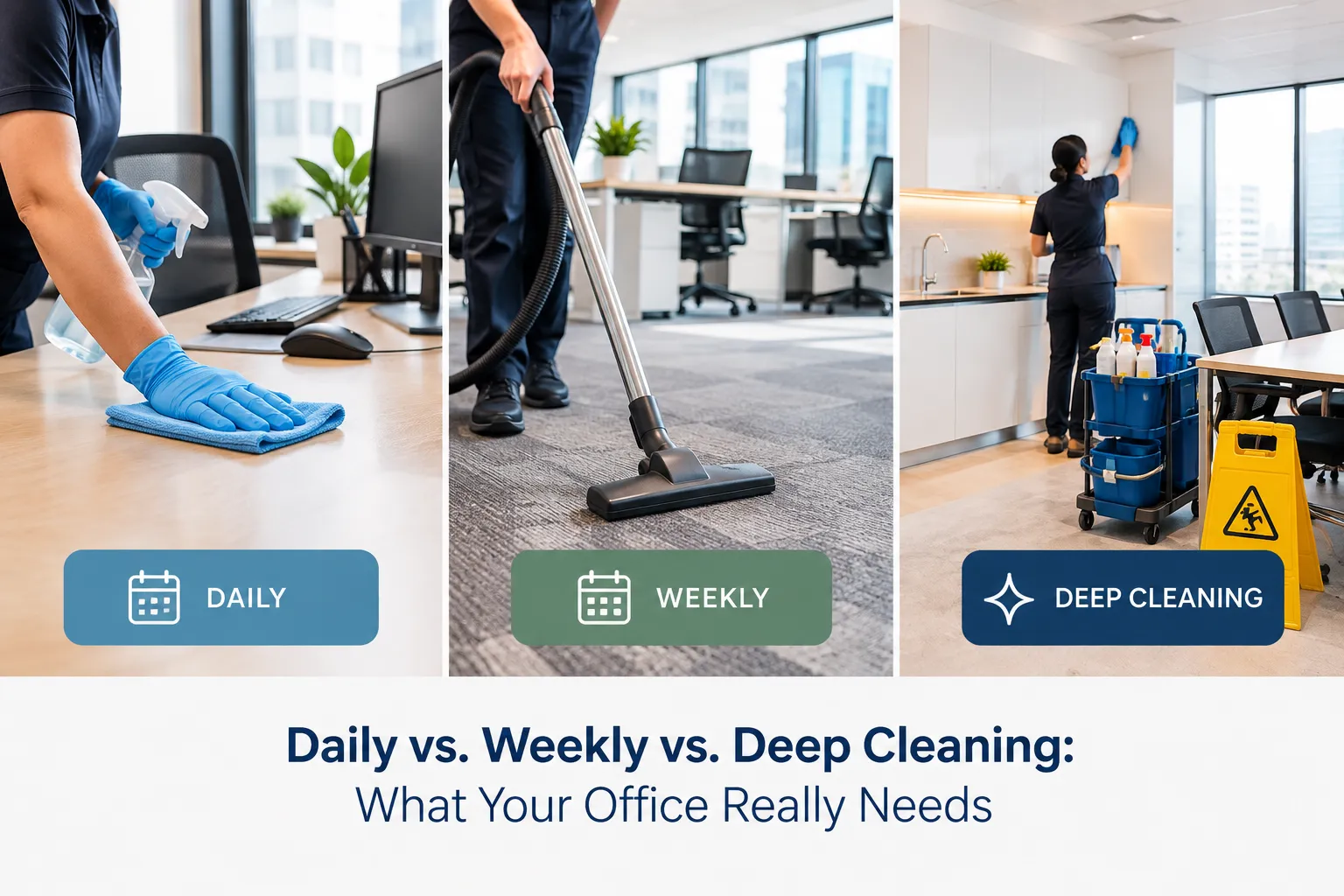
When it comes to co-working hub cleaning, frequent use requires more cleaning and upkeep. A desk used by one person might be fine with a weekly wipe. On the other hand, a frequently used hot desk needs attention every day to remove dirt, debris, dust, bacteria, smudges, and lingering odours.
The Areas That Need the Most Attention
Knowing the areas that need frequent cleaning in your co-working space allows you to prioritise high-traffic and high-touch areas, prioritise consistent hygiene, and create a spotless, more welcoming workspace. These areas include:
- Hot desks and shared workstations. Keyboards, mice, desk surfaces, chair arms and monitor stands should be wiped and disinfected daily. WorkSafe Queensland also suggests hot desk users keep desks clear and use their own equipment where possible, which facilitates faster, more comprehensive cleaning.
- Kitchens and break areas. Shared kitchens can be problematic for co-working hub managers. Fridges fill with forgotten lunches, sinks pile up with mugs, and benches collect crumbs. For these reasons, they need cleaning every day and a clear rule about labelling food to prevent confusion.
- Bathrooms. With more users than a standard office, bathrooms in shared spaces need cleaning at least once a day. In busy hubs, a midday check to restock soap, paper towel and toilet paper is worth adding.
- Meeting rooms. Tables, whiteboards, remote controls and conference phones are handled by a new group every hour or two. A quick wipe between bookings, plus a full clean each night, keeps them ready for the next client meeting.
- Touch points. Door handles, lift buttons, light switches, printer panels and swipe card readers are touched by nearly everyone. These should be disinfected daily to maintain a safe, hygienic workspace.
Setting Clear Responsibilities
One of the biggest cleaning problems in shared offices isn’t dirt—it’s confusion. Who empties the bins in the common area? Who cleans the fridge? Who pays for the carpet clean after someone spills red wine during a get-together?
If you manage or share a space, we recommend writing a simple cleaning agreement, which covers the following aspects:
- Determining shared and exclusive spaces.
- Assigning people to arrange and pay for cleaning of common areas
- Establishing the ideal cleaning frequency for each space.
- Naming the tenants who can do certain cleaning tasks themselves.
- Establishing contingency plans for potential issues.
Clear rules prevent disputes from escalating and allow a professional cleaner on the Gold Coast to accomplish specific tasks for each visit.
Timing Matters
Shared spaces often operate longer hours than a standard office. Some co-working hubs open early for people who start before the school run and stay open late for teams working with overseas clients. That extended schedule can make it challenging to establish a consistent cleaning window.
Fortunately, a good commercial cleaner will work around your busiest periods. That might mean a full clean overnight, a light daytime service to keep kitchens and bathrooms in order, and a deeper clean on weekends when the space is quiet. The aim is a clean office without cleaners getting in the way of the people using it.
Why Professional Cleaning Pays Off
For co-working operators, cleanliness is part of what members are paying for. A grubby kitchen or a sticky hot desk is one of the fastest ways to lose members and compromise your long-term reputation. For businesses that share an office, a clean space protects your reputation when clients visit and helps keep your team healthy.
A professional service brings consistency. Trained cleaners follow a tailored checklist, use safe, innovative products for each surface and spot problems before they worsen. They also relieve you of burdensome cleaning, so you can focus on your tasks for the day and remain productive.
At Oz Commercial Cleaning, we clean shared offices, co-working hubs and multi-tenant floors across the region. We start with a walkthrough of your space, look at how it’s used and when it’s busiest, then put together a schedule that covers the high-traffic areas without charging for work you don’t need.
The Bottom Line
Shared offices bring people together, and that’s their biggest strength. It’s also why they need more careful cleaning than a traditional office. Focus on the surfaces people touch most, agree on who is responsible for certain tasks, and choose a cleaning schedule that aligns with your co-working hub’s operating hours.
If you’re looking for trusted office cleaning on the Gold Coast that co-working operators and shared tenants can count on, talk to a commercial office cleaning company in Gold Coast QLD that understands how shared spaces work. Our staff can help you maintain a clean space that retains your current members and makes a good first impression on every visitor.
Frequently Asked Questions (FAQs)
What is the ideal cleaning frequency for hot desks?
Hot desks should be wiped and disinfected at least once daily, ideally at the end of each day. In busy spaces where desks change hands several times a day, provide wipes so each person can clean before they sit down.
Who is responsible for cleaning in a shared office?
It depends on your agreement. Usually the landlord or co-working operator looks after common areas like kitchens, bathrooms and hallways, while each tenant looks after their private space. We highly recommend putting the arrangement in writing to avoid confusion.
Can cleaners work while a co-working space is open?
Many shared spaces in Australia use a light daytime service to restock bathrooms and tidy kitchens, with the main clean done after hours. This keeps the space fresh without disturbing members.
What are the priority cleaning areas in a shared office?
Focus on the places people touch most: hot desks, keyboards, kitchen benches, appliance handles, bathrooms, meeting room tables, door handles, lift buttons and printer panels. These spots get dirty fastest and carry the most germs.
How can members help maintain a clean shared office space?
Ask members to wash their own dishes, label food in the fridge, clear desks at the end of the day and report spills immediately. Simple house rules, posted where everyone can see them, make a big difference between professional cleans.