How often should an office be cleaned? It’s a question many Australian managers and supervisors frequently ask. As a trusted cleaning company with over two decades of industry experience, serving numerous businesses since 1999, we are well-equipped to clear any confusion surrounding this issue.
We strongly recommend cleaning an office to ensure optimal hygiene, health, well-being, safety, and a professional reputation. Infrequent cleaning can compromise employees’ health, safety, productivity, and self-esteem.
Please note that not every office requires thorough attention to detail. Sanitation frequency depends on several factors, including the property size, nature of the business, staff size, and frequency of on-site client interaction.
Key Takeaways
- Cleaning frequency depends on multiple factors – Office size, staff numbers, business type, and client traffic all influence how often cleaning is required.
- High-traffic areas need daily cleaning – Spaces like desks, kitchens, restrooms, reception areas, and shared equipment should be cleaned and disinfected every day.
- Different tasks follow different schedules – Weekly cleaning covers areas like windows and meeting rooms, while monthly or periodic cleaning targets carpets, upholstery, and vents.
- Deep cleaning is required periodically – More intensive cleaning is typically done quarterly or annually.
- A tailored cleaning plan is essential – Busy offices may require daily or even multiple cleans, while smaller offices may need less frequent but consistent maintenance.
This blog will explain the ideal cleaning frequency for offices, enabling Australian managers and supervisors to make informed decisions and enjoy a productive and collaborative work environment.
Do Certain Office Spaces Require More Frequent Cleaning Than Others?
Each office area is unique and has different cleaning requirements. For this reason, you don’t have to clean each office space with the same frequency. For instance, high-touchpoint and high-traffic areas, including kitchens, restrooms, and office desks, require more sanitation and disinfection than others. Frequent cleaning ensures the optimum safety, health, and well-being of your employees.
This simple cleaning frequency guideline provides you with our recommended cleaning frequency for specific office spaces:
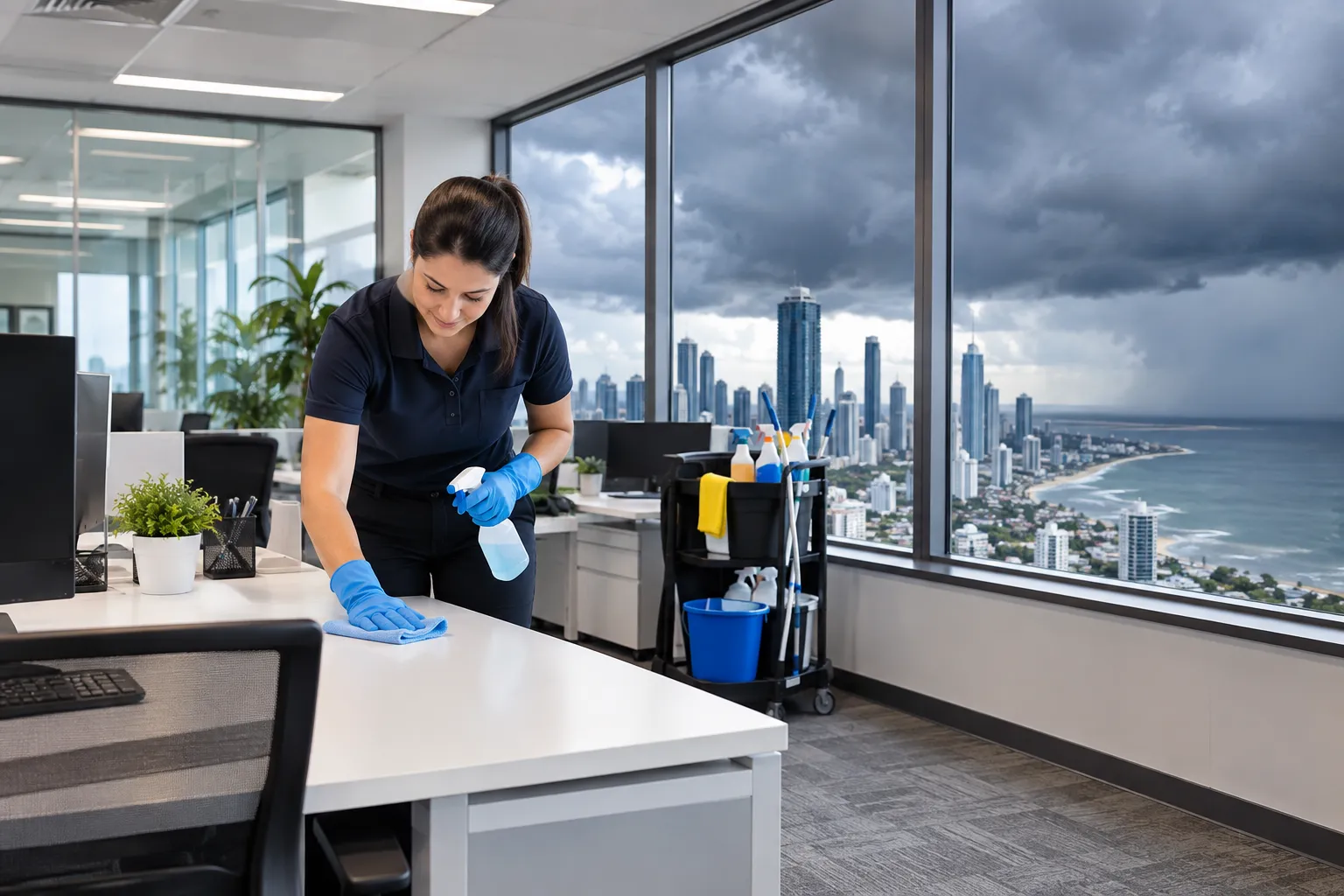
- Daily cleaning: Office desks, restrooms, kitchens, co-working spaces, healthcare administration offices, reception areas, door handles, phones, and shared equipment.
- Weekly cleaning: Internal windows, seldom-used meeting rooms, backs of printers, and spaces underneath desks.
- Monthly, end-to-end cleaning: Carpets, upholstery, vents, and blinds.
- Quarterly to annual cleaning: Carpet shampooing, external windows, and underutilised office spaces, including storage or supply rooms, file or print rooms, and training or event spaces.
What Are The Advantages of A Clean Office?
A pristine, unblemished office transcends mere aesthetics and visual appeal. Understanding the advantages of a clean workspace will inspire you to maintain neat, organised surroundings year-round.
- Improved employee health and well-being: Employees thrive in offices that are free of dust, dirt, grime, contaminants, and allergens. They will enjoy optimum long-term health and reduce absenteeism, resulting in a vibrant, efficient team.
- Enhanced workspace safety: Slippery floors, obstructed walkways, exposed wires, and strewn office equipment can threaten employee safety. Following your contractor’s cleaning frequency requirements significantly reduces these hazards, delays, and disruptions.
- Efficient operations: A decluttered, organised office allows employees to easily access files and documents and operate properly-maintained office equipment, enhancing long-term operational efficiency.
- Increased productivity: Studies have shown that messy offices distract and frustrate employees. A clean workspace ensures that your staff remains focused on essential tasks and provides the required deliverables on time.
- Valuable first client impressions: First-time customers tend to choose businesses exuding professionalism and efficiency. Your organisation can achieve these objectives by hiring a trusted, highly experienced office cleaning contractor with an extensive track record.
How Much Cleaning Does My Office Require?
Frequency and depth are the primary considerations when determining the amount of office cleaning. For instance, a ten-person legal office with infrequent visitors may only require nightly end-to-end cleaning and deeper sanitation once a month.
On the other hand, a busy call centre employing fifty employees working two shifts may require cleaning between shifts and deep weekly sanitation. Conversely, a creative agency that accommodates multiple clients daily may require daily morning and evening cleanings, especially high-touchpoint areas, such as door handles, entryways, workstations, kitchens, restrooms, and office equipment.
Office cleaning contractors usually offer three basic sanitation packages, including the following:
- Basic clean: This package includes sanitising desks, emptying bins, disinfecting restrooms, and hoovering carpets.
- Standard clean: This package includes basic cleaning activities, plus kitchen, high-touchpoint, and floor sanitation.
- Deep cleaning: As the term implies, the most comprehensive cleaning package sanitises every nook and cranny of office properties, including carpets, fixtures, windows, air vents, and walls.
Your office cleaning requirements hinge mainly on the frequency of use of each area. Matching these critical factors will help you reap the long-term benefits of workplace sanitation.
Does Cleaning Frequency Depend on Office Type or Industry?
Since industries have different cleaning requirements, sanitation frequency varies across these sectors.
For example, medical and dental clinics must adhere to strict health and safety protocols, requiring daily end-to-end cleaning. On the other hand, tech companies usually require specific server room and equipment cleaning, while creative studios require personalised material and prop sanitation without stifling creative innovation.
High-traffic industries that require frequent cleaning include the following:
- Government sector
- Public, legal, and financial services
- Educational facilities (schools, childcare centres, universities)
- Customer service hubs
- Real estate and property management (body corporate cleaning)
- Co-working spaces
- Tech companies
- Hospitality and event management offices
What Signs Indicate Insufficient Office Cleaning?
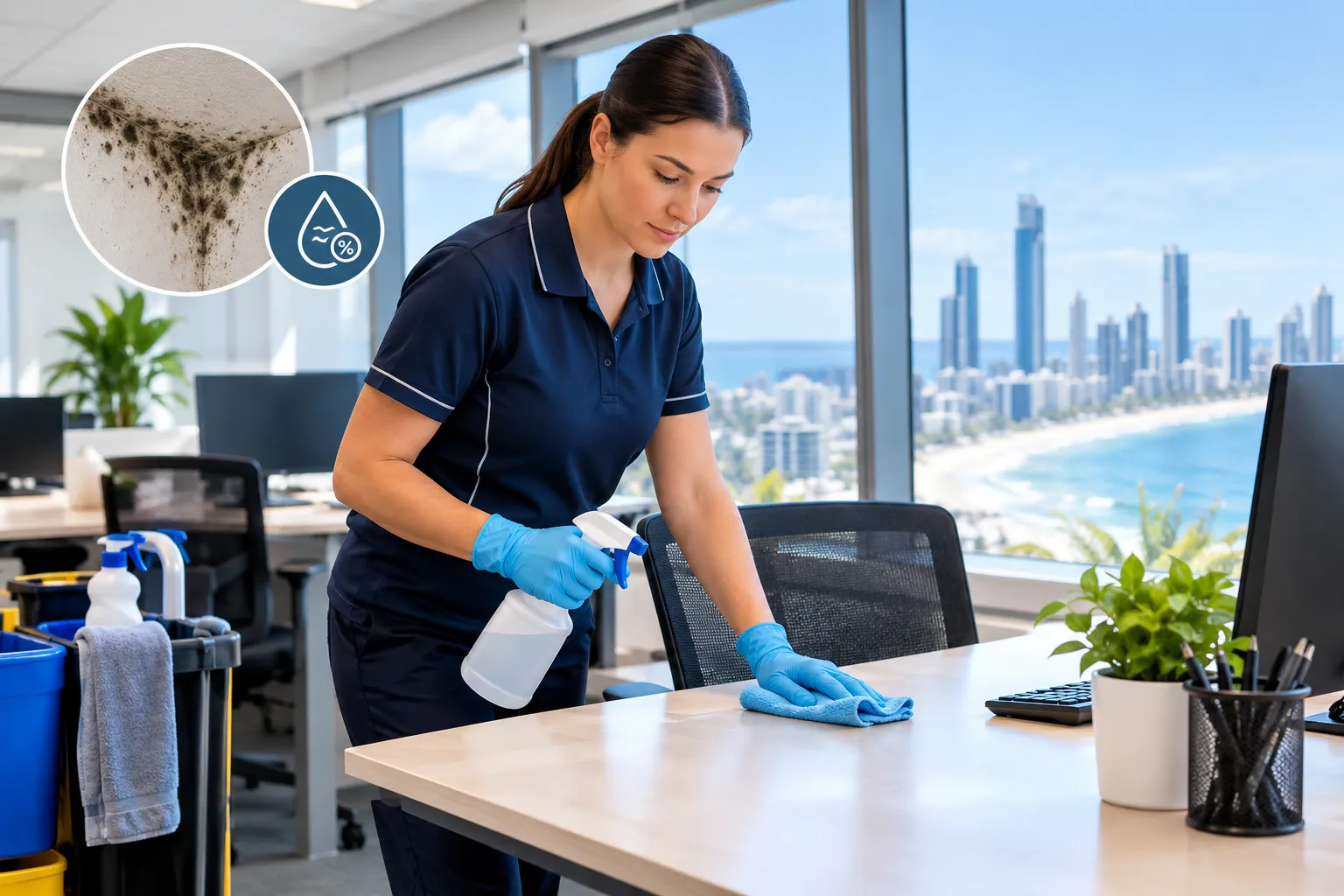
The signs of insufficient office cleaning include the following:
- Mouldy odours
- Staff absenteeism
- Visible and persistent dirt and dust
- Greasy surfaces
- Unsanitary restrooms
- Pest proliferation
- Dilapidated carpets and upholstery
- Negative client first impressions
If your office shows multiple signs of inadequate sanitation, it may be time to consider a highly skilled and experienced office cleaning company. Allowing these eyesores to persist over time can compromise workplace aesthetics, productivity, and morale. It can also lead to staff health issues and create a negative impression for customers.
Fortunately, hiring a trusted service provider who can clean every nook and cranny of your property can be a game-changer for your business.
Should I Hire In-House or Outsourced Office Cleaning Contractors?
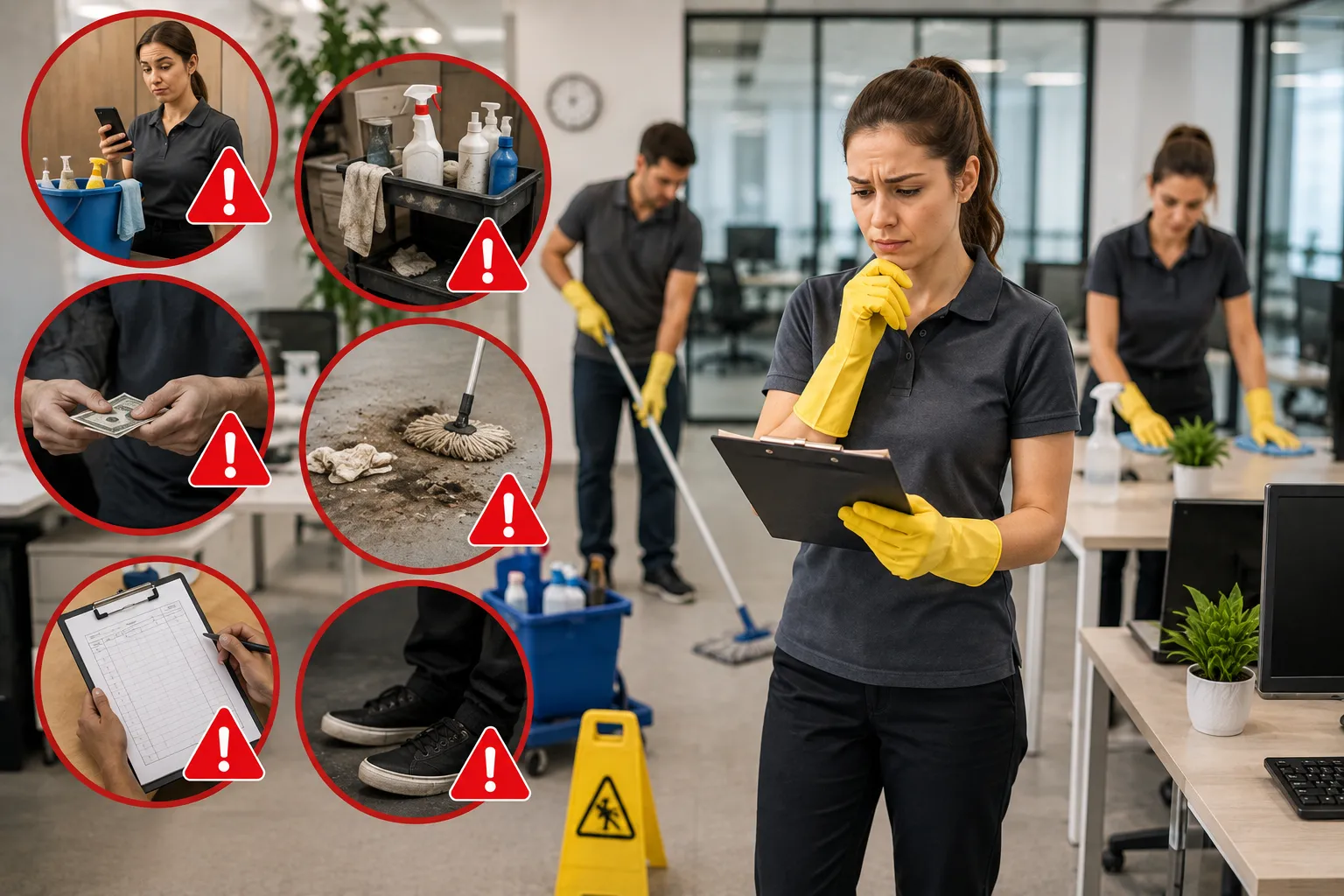
Choosing between an in-house and outsourced office cleaning company varies among numerous Australian businesses. However, the latter staff’s cutting-edge equipment, commitment to customer service, safety, and professionalism, strict adherence to health and safety protocols, and innovative training can make your office pristine and immaculate, providing your company with excellent value for money.
Unfortunately, many businesses treat office cleaning as a secondary task, taking a backseat to more critical concerns. However, we firmly believe that a consistently clean office enhances customer trust and satisfaction, safeguards staff health and well-being, and enhances long-term productivity.
For this reason, we strongly urge your company to prioritise regular office sanitation to ensure the long-term success and productivity of your business.
FAQs
What is a good cleaning routine for a typical office?
A good office cleaning routine depends on how many people use the space, how often clients visit, and which areas get the most traffic. Most offices need daily attention for desks, kitchens, restrooms, reception areas, door handles, phones, and shared equipment. Areas used less often, such as internal windows, meeting rooms, printer backs, and spaces under desks, may only need weekly cleaning. Carpets, upholstery, vents, and blinds usually need a deeper monthly clean, while external windows, storage rooms, and underused spaces can be handled quarterly or annually.
How do I know which areas need daily cleaning?
Daily cleaning should focus on the areas people use, touch, or walk through most often. This usually includes workstations, restrooms, kitchens, reception areas, co-working spaces, door handles, phones, shared equipment, and other high-contact points. These areas collect germs, dust, spills, fingerprints, and general mess quickly, so leaving them too long can affect workplace hygiene and presentation. Less-used areas still need attention, but they can usually be placed on a weekly, monthly, or periodic schedule. The simplest rule is this: the more people use it, the more often it should be cleaned.
Why do some offices need cleaning more often than others?
Some offices need cleaning more often because they have more staff, longer operating hours, higher foot traffic, or more client visits. Industry also plays a role. Medical and dental clinics need very strict hygiene standards, while call centres, co-working spaces, schools, childcare centres, customer service hubs, and hospitality offices often need more frequent cleaning because many people use the same areas. A smaller office with few visitors may not need the same level of daily attention, but it still needs consistent maintenance to protect staff health, workplace safety, and the company’s reputation.
When should a business review its office cleaning schedule?
A business should review its cleaning schedule when the office starts showing signs that the current routine is not enough. These signs can include musty odours, visible dust, persistent dirt, greasy surfaces, unsanitary restrooms, pest activity, worn-looking carpets, stained upholstery, and poor impressions from visitors. More staff sick days may also point to hygiene issues. If these problems keep appearing between cleans, the frequency, depth, or scope of cleaning may need to change. A review can help match the cleaning schedule to the way the office is actually being used.
Should office cleaning be handled by staff or a professional cleaner?
Office staff can help with small habits such as keeping desks tidy, wiping minor spills, and putting rubbish in the right bins, but full office cleaning is usually better handled by professionals. Professional cleaners have the equipment, supplies, training, and systems to clean restrooms, kitchens, floors, high-touch areas, carpets, vents, and shared spaces properly. They can also build a cleaning schedule around the office’s size, industry, traffic, and operating hours. This keeps hygiene standards more consistent and lets employees focus on their usual work instead of cleaning duties.
Conclusion
A sparkling, unblemished office exudes professionalism, efficiency, trust, and respect. Making regular business property sanitation a top priority shows your commitment to these values.
Your office cleaning requirements and frequency depend on the nature of your business, the volume of high-touchpoint areas, and each area’s frequency of use.